
The Fed’s new digital cage for your savings (From Weiss Ratings)
Key Points
- Elite directors and writers have collectively voiced their opposition to the consolidation of both major legacy film and television studios.
- The United Kingdom Competition and Markets Authority has launched an investigation into the potential impacts of the deal on international markets.
- Leadership within the organization recently liquidated a substantial portion of its holdings during the current quarter as institutional activity grows.
- Special Report: This Elon-approved AI income stream could make you $30k-$50k a year (From InvestorPlace)
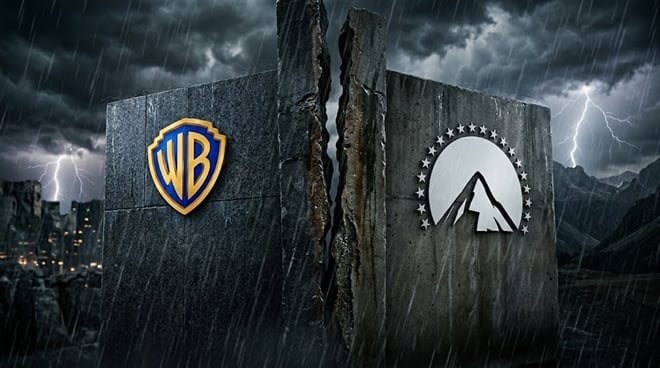
In the high-stakes world of media, the proposed $110 billion merger between Paramount Skydance (NASDAQ: PSKY) and Warner Bros. Discovery (NASDAQ: WBD) was meant to be a showstopper. The strategic goal was clear: Forge a global entertainment sector titan with the scale to dominate the fiercely competitive streaming wars.
Just $5 - AI Stock Is Turning Heads (Here’s Why) (Ad)
While attention stays fixed on dominant AI names, one low-priced stock is gaining quiet momentum - trading for pennies compared to industry leaders like Nvidia.
Early investors still have a window before this pick reaches wider awareness. A modest position could establish exposure ahead of broader attention. A 12-page Special Report covers the full case, including the name and ticker.
Watch the video update and get the name and ticker now
However, what was envisioned as a triumphant final act is now facing a hostile rewrite, not from a corporate rival, but from the industry's creative core. A stunning public rejection from over 1,000 of Hollywood's most influential writers, directors, and actors has thrown the deal’s future into question.
This talent rebellion is the most recent visible crack in a foundation already shaking from the tremors of insider skepticism and looming regulatory battles. For investors holding or watching WBD stock, the convergence of these powerful forces has created a uniquely precarious situation, demanding a closer look at whether this blockbuster deal is destined for a tragic ending.
Facing Fire From All Sides: The Merger's Opposition
A media company’s most valuable assets are not its studio lots or its film vaults, but the creative minds that produce the content audiences crave. This human capital has now become the central risk in the WBD-Paramount narrative.
Hollywood's open letter, signed by A-list talent, is a powerful demonstration of industry-wide collective power. Citing fears that further consolidation will crush competition, reduce opportunities, and limit creative diversity, Hollywood’s creators have drawn a clear line in the sand. This poses a direct threat to the company’s future revenue, as a potential exodus of top-tier talent to more creator-friendly environments, such as Netflix, Inc. (NASDAQ: NFLX), could leave the newly formed giant with a severe content deficit.
Attempting to control the narrative, Paramount’s management quickly issued a response, seeking to mitigate the risk of a talent drain. The company publicly committed to greenlighting at least 30 feature films annually and to preserving the creative independence of its iconic studio brands. This pledge is a direct acknowledgment of the creative community's power and an attempt to reassure investors that its content pipeline will remain secure.
While WBD confronts this internal industry dissent, a second front has opened overseas. The United Kingdom's Competition and Markets Authority (CMA) has announced a formal probe into the merger. This is far more than a procedural step; it introduces a significant layer of tangible risk.
A CMA investigation is a time-consuming process that can end in several ways, with all of them presenting challenges for the deal. Regulators could demand that the combined company divest, or sell off, valuable assets like television networks or film libraries as a condition of approval. At worst, they could block the merger entirely in a critical international market, fundamentally altering the deal's financial logic.
Red Flags on Wall Street: Debt, Doubt, and Executive Exits
While external forces apply pressure, warning signs are also flashing from within the company and across the broader market. The most compelling evidence comes from Warner Bros.’ own leadership. In March 2026, a wave of insider selling suggested a stark lack of confidence from those who know the company best.
CEO David Zaslav sold shares valued at approximately $113.16 million, while other key executives, including the chief financial officer, sold a combined total of more than $140 million worth of shares.
That volume of insider selling is a powerful signal. It suggests that leadership is actively reducing personal financial exposure ahead of anticipated volatility—a move that speaks louder than any press release. Insider caution is also reflected in the market's broader sentiment. As of March 31, short interest in Warner Bros. Discovery stock soared by 24.5% from the prior month. This means a growing number of institutional traders are placing significant bets that the stock's price will decline—a clear sign of widespread market skepticism.
This doubt is compounded by WBD’s underlying financial health. The company is not entering this risky merger from a position of indisputable strength. Its latest earnings report from Q4 2025 missed analyst expectations, with the company posting a loss of 10 cents per share against an expected profit. This performance, combined with a 5.7% year-over-year revenue decline, paints a picture of a company facing operational headwinds.
Against this backdrop, the stock’s high price-to-earnings ratio (P/E) of 94 appears disconnected from reality. A P/E that high suggests investors expect near-perfect execution and massive growth—an expectation that is now severely challenged by the very real possibility of a messy, contentious, and potentially failed merger.
The Final Cut: A Risky Bet for Investors
The proposed merger of Warner Bros. Discovery and Paramount Skydance is no longer a straightforward story of corporate mergers and acquisitions. It has become a high-stakes drama defined by a perfect storm of converging risks.
A public revolt from its most essential asset—the creative community—is escalating alongside a serious regulatory challenge and clear signals of doubt from the company’s own leadership and the wider market. For investors, the theoretical long-term benefits of the deal are now overshadowed by immediate and substantial threats to its successful execution.
The current landscape presents a highly speculative and unfavorable risk-reward profile. The path forward for Warner Bros. Discovery's stock will be heavily influenced by how the company navigates these challenges. Investors should pay close attention to three key developments: any signs of progress or further breakdown in talks with Hollywood’s guilds, the preliminary findings from the United Kingdom's antitrust probe, and how management addresses these critical issues during the upcoming earnings call, estimated for May 7, 2026.
Featured Articles
- NVIDIA's Quantum Computing Play Just Sent IonQ and Rigetti Flying
- Ticker Revealed: Pre-IPO Access to "Next Elon Musk" Company (From Banyan Hill Publishing)
- Why Oil Refiners Are the Real Winners of $100 Oil Prices
- Altucher: This is My Favorite FREE Starlink Pre-IPO Ticker (From Paradigm Press)
- Apple's Foldable iPhone Foray: A Real Needle Mover or Hype Train?
- Sky-High Stakes: United and American Merger Rumors
- Are Oracle’s 30,000 Layoffs a Sign of Weakness or Strength?
Stay Ahead of the Market
The best investment opportunities don't wait. Get our research and stock ideas delivered straight to your smartphone—so you never miss a market-moving opportunity. Our text alerts ensure you see timely stock ideas and professional research reports instantly, whether you're in a meeting, commuting, or away from your desk.
