
The SpaceX IPO playbook most investors will get wrong (From InvestPub)

Key Points
- Tech stocks are the hot trade, but with crowded markets come volatility: here are three ways to reduce portfolio risk.
- Qualities to look for include stable business demand and reliable dividends.
- Smart money, as indicated by institutional trends, values diversification and the cash flow from safe-haven investments.
- Special Report: Is SpaceX really worth 1.78 Trillion? (From InvestPub)
AI stocks are the hot trade in 2026 and may continue to dominate markets. However, knowing which AI stock will experience the next pop or drop is tricky, driving the need for diversification. Diversification protects portfolios from unnecessary volatility and risk, providing stable, albeit slower, returns while waiting for those higher-risk tech stocks to appreciate. Defensive stocks share some qualities, including stable demand, reliable dividend payments and lower-than-average beta.
Beta is a widely misunderstood metric. It measures a stock’s volatility relative to a benchmark, typically the S&P 500, rather than the expected volatility of the underlying issue. Low-beta stocks are not immune to volatility, but they have historically been less sensitive to broad market moves. The difference is that their price action is less tied to macroeconomic swings than the average stock because of income stability and capital returns.
ALERT: Drop these 5 stocks before the market opens tomorrow! (Ad)
The Wall Street Journal is already raising the alarm about a potential market crash, and Weiss Ratings research points to the first half of 2026 as a particularly rough stretch for certain holdings.
Some of America's most popular stocks could take serious damage as a radical market shift plays out. Analysts at Weiss Ratings have identified five names you may want to remove from your portfolio before this unfolds.
If any of these are in your portfolio, now is the time to review your positions.
UnitedHealth Is Set Up for Sustainable Price Recovery
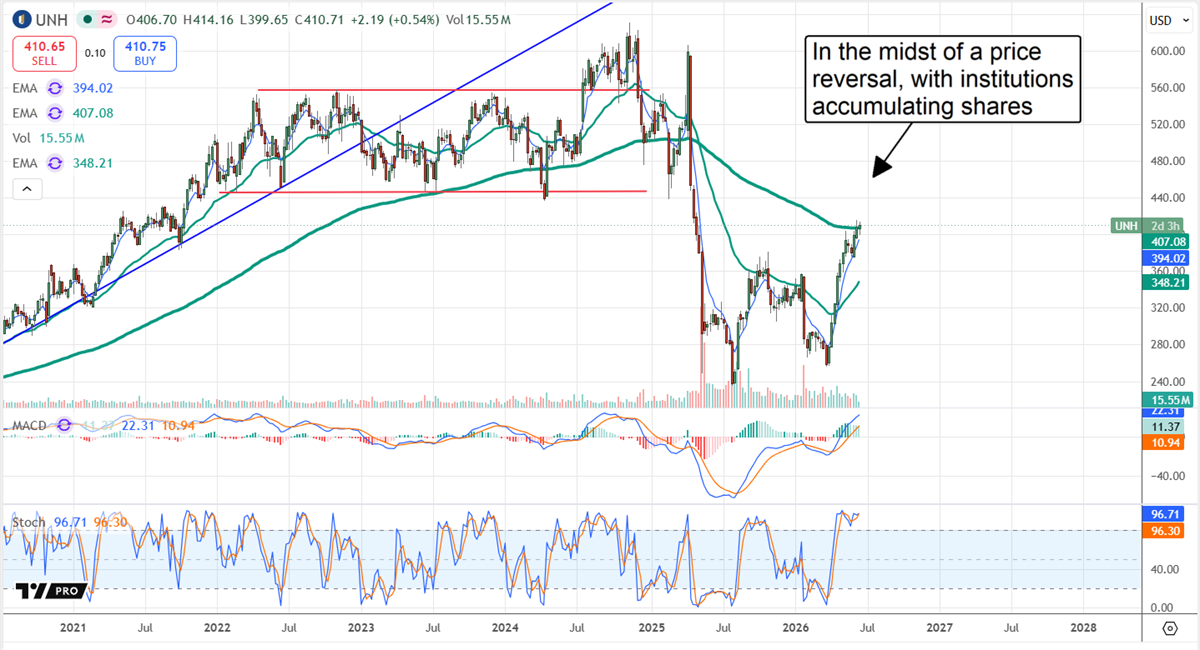
UnitedHealth (NYSE: UNH) has struggled the past year with an executive shakeup, legal woes, and margin pressure. However, the company has navigated its headwinds well, setting itself up to resume growth in upcoming quarters, accelerate it, and drive improving profitability. This underpins a healthy capital return outlook, which includes dividends and share buybacks. The dividend yields more than 2.25% annualized as of mid-June and is expected to grow over time.
UNH is on track to be included in the Dividend Champions index, has increased its distribution at a double-digit compound annual growth rate over the past few years, and pays approximately 50% of its earnings. Share buybacks are also substantial, having reduced the count by an average of nearly 1% as of Q1 2026.
UNH’s beta is very low at 0.64 over the trailing three years. Factors contributing to the low beta include the company's predictable cash flow, visible catalysts, and capital returns—its owners include a high percentage of long-term, buy-and-hold investors.
Despite recent woes, analysts have maintained a Moderate Buy consensus for UNH stock. The story in mid-2026 is that price targets are rising again, signaling a reversal in this market. Institutional activity is also robust, with them owning approximately 88% of the shares and accumulating for seven consecutive quarters.
Brookfield Corporation: The Crown Jewel of Real Asset Investing
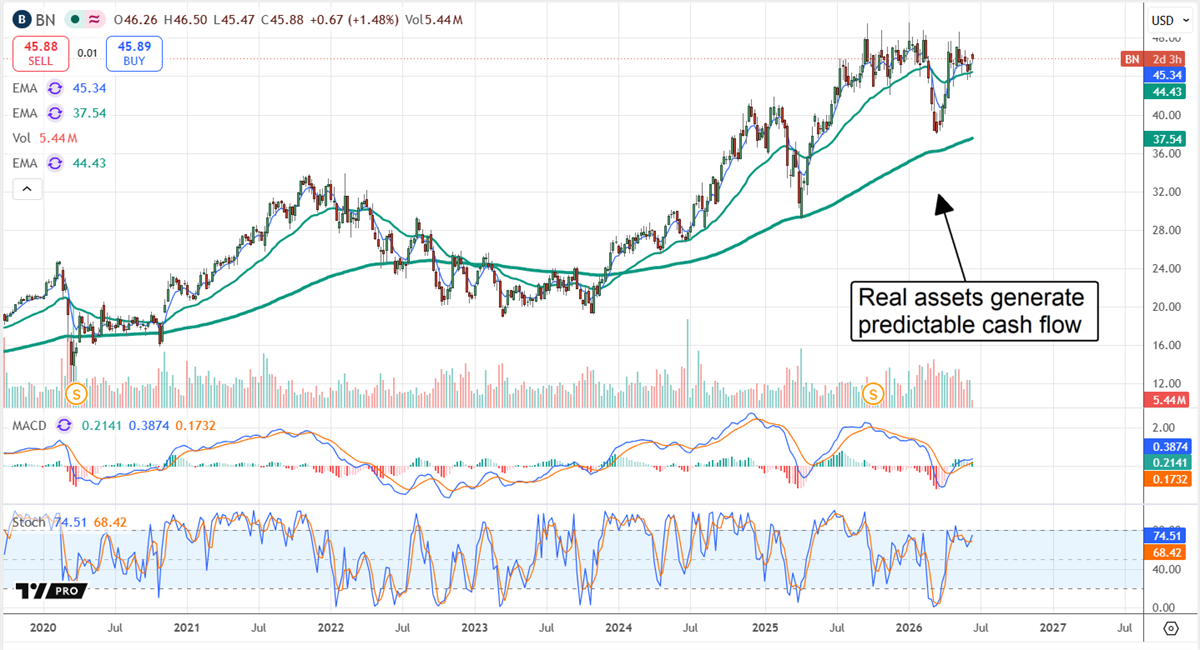
Brookfield Corporation (NYSE: BN) is the crown jewel of real asset investing as it is the world’s largest alternative investment corporation. Real assets are tangibles like commodities, natural resources, real estate, and infrastructure. They are an asset class in their own right, attractive for their intrinsic value, inflation-resistance, and cash-generating qualities. The company operates in three segments, providing exposure to wealth management, insurance services, and direct asset ownership.
Among Brookfield’s attractions are its cash-generating qualities and capital returns. The dividend is barely more than a token at a 0.6% yield, but it's compounded by share buybacks. The latest authorization is worth up to 10% of the share count, with trailing-12-month activity reducing the count approximately 0.65% as of Q1.
Brookfield is not a low-beta stock, as it is exposed to commodity price swings and geopolitical risks. However, it is viewed as a safe haven because of its tangible assets, inflation-linked cash flow, and substantial fee-based management business. The combination provides steady, predictable cash flow, enabling business growth, financial strength, and capital return.
SpaceX will crumble without these 5 companies (Ad)
The SpaceX IPO is drawing near, but the real opportunity may lie in 5 lesser-known companies providing the critical infrastructure SpaceX depends on to operate.
Goldman Sachs and Morgan Stanley are reportedly already building positions in one of these names. Another is a resource miner that Elon Musk's broader empire - including Tesla - relies on. Lance Ippolito has detailed all five inside his free SpaceX Investing Blackbook.
Download the free SpaceX Investing Blackbook before these names go mainstream
American Electric Power: Monopolizing Cash Flow and Capital Return Safety
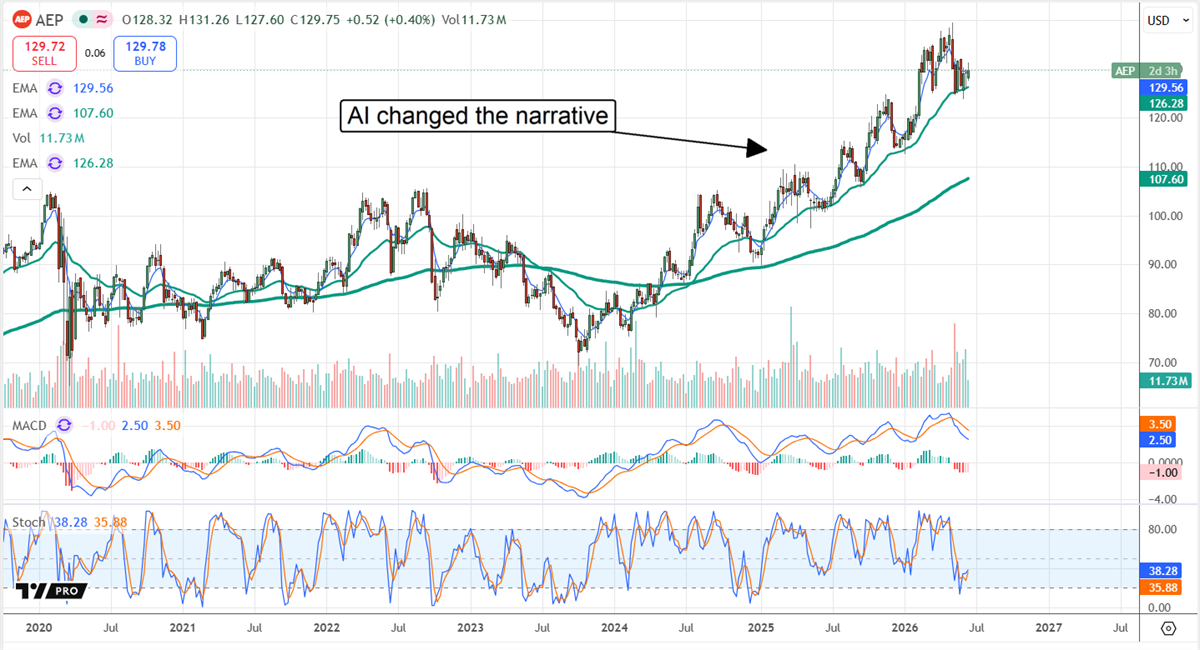
Utility companies are traditional safe-haven plays with heavily regulated, entrenched businesses. Operators like American Electric Power (NYSE: AEP) provide stable, steady income, reliable yields, and growth opportunities. Not only is the U.S. power grid old and ailing, in need of updating, but demand is growing and expected to remain strong in the upcoming years. Data centers are only part of the story, as growth in the household and business sectors is also at play.
American Electric Power provides a strong dividend, yielding nearly 3% as of late Q2 2026. The payout ratio is a bit high, over 60%, but only when compared to average companies. Utilities such as AEP, with highly visible and relatively unimpeded cash flows, tend to sustainably pay out a larger portion of earnings. Regulation means rising costs can be offset by higher prices, which is a catalyst in the industry today.
AEP’s stock beta is approximately 0.53, reflecting price action only half as volatile as the average stock. Fundamentally, AEP is in an uptrend, supported by rising demand and plans to expand capacity, which have analysts buzzing. In their view, datacenter demand changes the story from humdrum utility to a high-growth story with legs.
Read More
- 3 Retail Winners Using Cash Flow to Stay Ahead
- Tiny $50 Investment Gives You a $177,133 Stake!? (From Paradigm Press)
- 3 Tech ETFs That Could Bounce Back After the AI Selloff
- FORGET the SpaceX IPO (From Tim Sykes)
- 3 Penny Stocks Under $5 Backed by Real Revenue Growth
- 3 Non-Pharma Firms That Could Benefit From the GLP-1 Trend
- MarketBeat Week in Review – 06/15 - 06/19
Stay Ahead of the Market
The best investment opportunities don't wait. Get our research and stock ideas delivered straight to your smartphone—so you never miss a market-moving opportunity. Our text alerts ensure you see timely stock ideas and professional research reports instantly, whether you're in a meeting, commuting, or away from your desk.
